Low Back Pain – The Basics

4 out of 5 people are reported to suffer from lower back pain in their life-time. This causes great inconvenience and can result in a significant time off work.

Your lower back, also known as your lumbar spine, consists of 5 vertebrae bones located above the triangle base of the spine in the pelvis. This area is curved with a natural inwards curve called a lordosis. The main function of the lumbar spine is to support the structures above. The lumbar spine moves in all ranges of motion with the most of the movement coming from the bottom 2 vertebrae.

There are multiple causes of lower back pain; these include disc and muscular issues, facet joint problems and neurological, degenerative and hereditary causes. Lower back pain can present with pain going down into the legs. It is also important to know that not all lower back pain can come down this route; on occasion pain can originate from internal organ problems such as kidney or bladder issues. Lower back pain is not just caused through injury. Sitting at a desk, being pregnant and those carrying young children are common aggravating factors. These are just some examples of the causes of lower back pain.

At Herts Pain and Injury, we will carry out a full medical assessment of your lower back pain. Your osteopath will take an extensive case history and perform an appropriate physical examination to ascertain the cause of your pain and plan your treatment. Your osteopath will be able to offer you a range of treatment options as well as advice on your rehabilitation. This advice could be in the form of exercises, life style changes in order to help prevent further problems later on. Your osteopath can also refer you for imaging, including an MRI scan, where applicable.


Author: James Small Feb 2021

Choosing the right trainer for you!

There are so many trainers out there to choose from, it can become a bit of a minefield when looking to buy a new pair.

I’ve put together some ideas and advice for you to think about;

 What are you going to be using them for?

Running? Weightlifting ? CrossFit? Walking? Tennis?

Each shoe is designed with something in mind; a running shoe, typically isn’t the best shoe to be wearing in the gym for weightlifting or CrossFit style training.

For training in the gym, you want a nice stable heel, a bit of a heel drop and not too much cushioning. This gives you a nice stable base. Whereas for running, particularly long distances, you may want something with a little more cushioning.

Do you have any pre-existing injuries or issues?

Existing injuries should be taken into account when choosing your shoes.

For example;

  • If you have a history of Achillies issues, shoes with a zero heel drop probably aren’t the most suitable due to the extra strain on then tendon.
  • If you’re suffering with a painful big toe, a slightly stiffer shoe might be more appropriate to prevent excess strain through the joint.
  • Do you suffer with osteoarthritis in the knees? A shoe with more cushioning may give you a bit more shock absorbency for your knees.

 Do you have particularly wide or narrow feet?

Different brands come up in different sizes to suit the various foot shapes. If you have a slightly wider foot, you need to accommodate this. Don’t try to squeeze into a pair of trainers just because you like them (I’ve definitely been very guilty of this in the past!).

Altra’ running shoes are great for people with wide feet, they have a really wide toe box to allow for splaying of the feet when you run!

 What sort of surfaces are you running on?

Are you running on road, on rough trails, on grass, on a treadmill? All of these factors should be considered when choosing a shoe!

 What sort of distance are you running?

This will potentially impact your choice; you may be quite comfortable in a light minimal shoe for short distances but as you increase your distance you might find you need something a little more supportive.

 Should you get your gait analysed?

If your planning on running, I would say yes! If you’re looking for more of a ‘gym’ shoe Its not necessary!

There are a few things you should bear in mind when;

  • Make sure it’s by someone who knows what they are doing. A lot of running shops provide gait analysis but it’s not always by someone experienced.
  • Make sure they’re looking at your feet, ankles, knees and hips when you’re running. Not just your feet.
  • Try to ensure the shop sells a variety of brands. Certain brands are better for different people so you want to have some different options.


Runners Knee

Runners Knee

The knee is the most commonly injured area of the body during running with ‘Runner’s Knee’ being the umbrella for a number of conditions such as anterior knee pain syndrome, patellofemoral malalignment and ITB syndrome. Although they are classed under Runner’s Knee, they can be common in other sports such as walking, skiing, biking, jumping and field sports.

Runner’s knee causes a dull, aching pain around or behind the kneecap dependant on the condition. For example ITB syndrome will cause aching on the outside of the knee. You may feel these symptoms when you are:

  • Walking
  • Climbing or descending stairs
  • Squatting
  • Kneeling
  • Running
  • Sitting down or standing up
  • Sitting for a long time with the knee bent


If you are experiencing knee pain I recommend you see Osteopath or Sports Massage Therapist to assess the root of the problem, especially if it is recurring. There are many causes of Runner’s knee such as:

  • Overuse of the knee
  • misalignment of the kneecap
  • complete or partial dislocation of the kneecap
  • flat feet
  • weak or tight thigh muscles
  • inadequate stretching before exercise

Depending on the cause of Runner’s knee will depend on how it is treated, but if you are experiencing any symptoms there are a few things you can do to relieve them.

Rest – This will reduce inflammation and therefore reduce pain in the knee. Resting doesn’t mean you need to do nothing, you can still train your upper body, do yoga or pilates  giving the knee sufficient rest. Due to common fears, resting will not create a dramatic drop in your running fitness, if anything it will enhance it. Use short term recovery for long term health benefits Rest and Recovery are key parts to training, which are massively overlooked. When planning your training regime, factor in rest time during the year, I normally take off time for a week or two in the summer after my races have finished and a week or two over christmas as well as some downtime after big races. Look at any major sport, they have an off season where they take a few weeks to ease their training off, recover and reset. They then start pre season and build that base back to ready for the next season.

Ice – 20mins at a time and wait at least 1hour before icing again. The more severe the inflammation will require more ice treatment.

Mobility – If certain muscles are tight, they can pull the knee and place added pressure on the joint, some basic yoga moves and mobility exercises can help to free up the joint and reduce symptoms. If your patella isn’t tracking properly then you may need specific exercises to realign the knee. It is always best to seek professional advice if you are unsure of what treatment or rehab you need.

Strength Training – Once the pain is reduced, strength training can significantly reduce Runner’s Knee symptoms and reduce the risk of it returning. Studies have shown that greater strength in the glutes provides more control at the knee joint when landing during the running stride. Below are some good exercises to kick start the glutes

Slingshot Clams

  • Place a resistance band around your knees
  • Keep the hips stacked on top of each other and don’t let the top hip roll back as you open the hip.
  • Perform 10 reps on each side, repeat for 3 sets.

Glute Bridge

  • Bend your knees so your feet are flat on the floor and knees are at 90deg
  • Rest your head back and place your hands down by your side
  • Squeeze your glutes and lift your hips up so the shoulders, hips and knees are in a line
  • Repeat 10 times for 3 sets

Slingshot Crab Walks

  • Place a band just above your knees
  • Start with your feet hip width apart
  • Take a large step out to the side then bring the trailing leg back into hip width apart
  • Keep your knees tracking over your feet and make sure they do not cave in.
  • Take 5 steps to one side, 5 steps back repeat 3 times.
  • Have a rest
  • Perform this for 3 sets.

Strengthening the rest of the legs including the quads, hamstrings and calves are all key to a strong running stride. Squats, lunges, deadlifts and calf raises are all key moves that will build up a base strength in the legs and core. If you are unsure of technique, reps, weight etc for any of these moves, don’t hesitate to drop me a message and I will be more than happy to help you with this.

Written by Andy Glen – Running Coach

https://finishing-line.com/

An Osteopaths’ Guide: Hamstring Strains!

The hamstring is split into 3; Semimembranosus, Semitendinosus, and Biceps Femoris. It attaches to the pelvis, runs down the back of the thigh to the lower leg and attaches just below the knee. It’s main job is to bend the knee but it also assists with other movements.


The hamstring is commonly injured in sports. Both ends of the hamstring have very poor blood supply meaning it can take a long time to heal. The middle part of the hamstring (the muscle belly) has a great blood supply which means a speedier recovery!


Hamstring strains or a ‘pulled hamstring’ can range from Grade 1 where you may feel a slight tightness but are still able to walk, to a Grade 3 where you could have severe pain and weakness and you may need crutches to walk. There will be swelling and bruising around the area.


What are the symptoms of a hamstring strain?

  • Sudden severe pain during exercise – You may feel a popping or snapping sensation
  • Pain in the back of the thigh when walking or bending forwards
  • Swelling and/or bruising at the back of the thigh
  • General tightness and tenderness at the back of the thigh


What may lead to a hamstring strain?

  • Poor flexibility
  • Lack of warming up
  • General stiffness
  • Poor low back mobility
  • Poor running mechanics
  • Low back and pelvic pathologies or imbalances


What should you do?

If you think you’ve pulled you’re hamstring…

  • Stop what you’re doing – playing or training through the pain is only going to make the injury worse and slow down the recovery time.
  • Ice it – 15 mins at a time.
  • Seek the advice of an professional…(Osteopath, Physio or Chiropractor. They’ll be able to advise you on the best course of action, whether that be hands on treatment, referral to another medical professional or exercise rehabilitation.

Whats the difference between Osteopaths, physiotherapists and Chiropractors?

I’m constantly being asked the difference between an Osteopath, Physio and Chiropractor…in short it really does depend on the individual therapist but here are some of the main differences.


Training 

Osteopaths spend 4-7 years at university and graduate with a masters degree. The training is very musculoskeletal, with an emphasis on treating the body as a whole.

Physios spend 3 years at uni and graduate with honours degree. Their training covers musculoskeletal conditions as well as respiratory and cardiac conditions. Some of their placements may be based on hospital wards.

Chiropractors typically spend 4 years at university. Their training is also predominantly musculoskeletal based.

Treatment 

Osteopaths work very holistically, they’ll look at the body as a whole. Their treatment may  involve manipulations or HVT’s (clicks), soft tissue massage, stretching or joint articulation. They will also probably give you exercises to do at home alongside treatment. Some osteopaths may use other modalities such as dry needling or taping alongside the osteopathy.

Physios tend to be very good at rehab. A lot of physios particularly NHS physios may concentrate solely on exercise rehabilitation rather than hands on treatment. This completely depends on the individual therapist as some may well be very hands on! Some physios may choose to specialise in different areas so its important you choose a physio that suits your needs.

Chiropractors concentrate predominantly on HVT’s (clicks) and work on the basis that things are ‘out of alignment or subluxed’. Generally speaking their treatments tend to be a lot shorter in length. Some chiropractors will still use x-rays within their consultations, this isn’t particularly helpful within a clinical scenario unless you’re concerned about a specific condition or injury!

As I said…this varies massively between practitioners depending on their background, training and personal experience.


5 Ways An Osteopath Can Help You During Your Pregnancy!

5 Ways An Osteopath Can Help you During Your Pregnancy!

1.Symphysis Pubis dysfunction OR SPD

Symphysis Pubis Dysfunction tends to present as pain, burning, grinding or clicking at the symphysis pubis (joint in the pubic bone). Pain may radiate into the groin, pelvic floor, front of your thigh or lower abdomen.

Ladies with symphysis pubis dysfunction often have difficulty walking, going up and down stairs, standing on one leg, getting in and out of the car and turning over in bed.

Symphysis pubis dysfunction is thought to be caused by a variety of factors;

  • pelvic instability and/or asymmetry,
  • increased lumbar lordosis (curve of the lower back),
  • weakened muscles,
  • rectus diastasis
  • poor hip function
  • Hormonal factors   – leading to hypermobility
  • Over doing-it whilst pregnant
  • Poor posture
  • Lack of exercise pre pregnancy and during pregnancy
  • Weight gain
  • Previous pregnancies
  • Increased maternal age
  • Previous difficult labours

Our Osteopaths will look at how your body functions as a whole and work with you to regain optimal function. This may involve stretching out muscles, mobilising joints or giving you exercises to work on any weaknesses. Working with your Osteopath throughout your pregnancy can help alleviate or prevent these symptoms from occurring.


2. Pelvic Girdle Pain

This is where you get pain around the pelvis, it tends to swap from side to side and is often associated with low back pain and/or pubic pain. The pain tends to be worse when weight bearing or twisting e.g. turning in bed or getting out the car. It can also cause referred pain.

This again is thought to be due to the pelvic instability as a result of the hormonal changes, altered posture and weight gain.

An osteopath can identify any instability or asymmetry and help you address it with a combination of treatment and exercises.


3.Coccyx pain

Coccyx pain is more common in women due to the shape of their pelvis anyway…The added weight gain, hypermobility from pregnancy hormones and the altered pelvic positioning puts more pressure on the coccyx and increases the chances of suffering with coccyx pain whilst pregnant.

By working on the musculature that attaches onto the coccyx and the joints around the pelvis, we can help take the pressure off the coccyx and improve the symptoms.


4. Back pain

Throughout your pregnancy, your posture changes drastically. The changes that occur, will be different in every women and every pregnancy. It’s important that your body is able to adapt to these changes. If it can’t adapt to the changes, you’ll start to notice aches and pains. An Osteopath will be able to help you adapt to these changes, making you much more comfortable.


5. Hip pain

As your bump grows throughout your pregnancy, you may find you start to turn your hips out when you’re walking to make it more comfortable. This can put strain on your hip joints. If your hips are generally ok and you have no issues pre pregnancy, then you should be able to cope with this adaptation for the time that you are pregnant. If however you have an underlying hip issue that hasn’t been addressed you may find that you struggle to cope with this change.

An Osteopath can work on your pelvis, low back and hips to help you adapt to these changes. They can also advise what to avoid and certain exercises that may benefit you!

Don’t suffer in silence! Just because you are pregnant, doesn’t mean you should be in pain!

Top Tips to avoid running injuries!

Sports Injury

Top Tips to avoid running injuries!


Follow a structured training programme.

Find yourself a proper training programme that increases the distance gradually over time. This should include a variety of running sessions and rest days. Rest days are just as important as the run days. We work closely with a highly experienced running coach at Finishing Line and would highly recommend them!


Stretching and mobility work

It’s important to work on your mobility and flexibility, some people prefer to just do their own stretching others prefer going to regular yoga sessions! Whichever works best for you.


Strength training

Try and incorporate some strength training into your programme. The stronger you are the more resilient to injuries you will be.


Stop if you get a niggle – don’t train through an injury

You’re better off missing a few sessions and getting an injury looked at rather than working through the pain and causing yourself more damage.  A niggle can very quickly turn into a full blown injury.


Regular sports massage

Sports massage can improve your recovery rate, mobility and general performance! A good therapist can also pick up any underlying issues that might not necessarily be causing any pain before it becomes an issue!


Suitable footwear!  

Its important you buy shoes that are suitable for your feet and running style. Find yourself a specialist running shop that accesses your gait and advises on which shoes are best suited to you.

Staying Safe In Resort

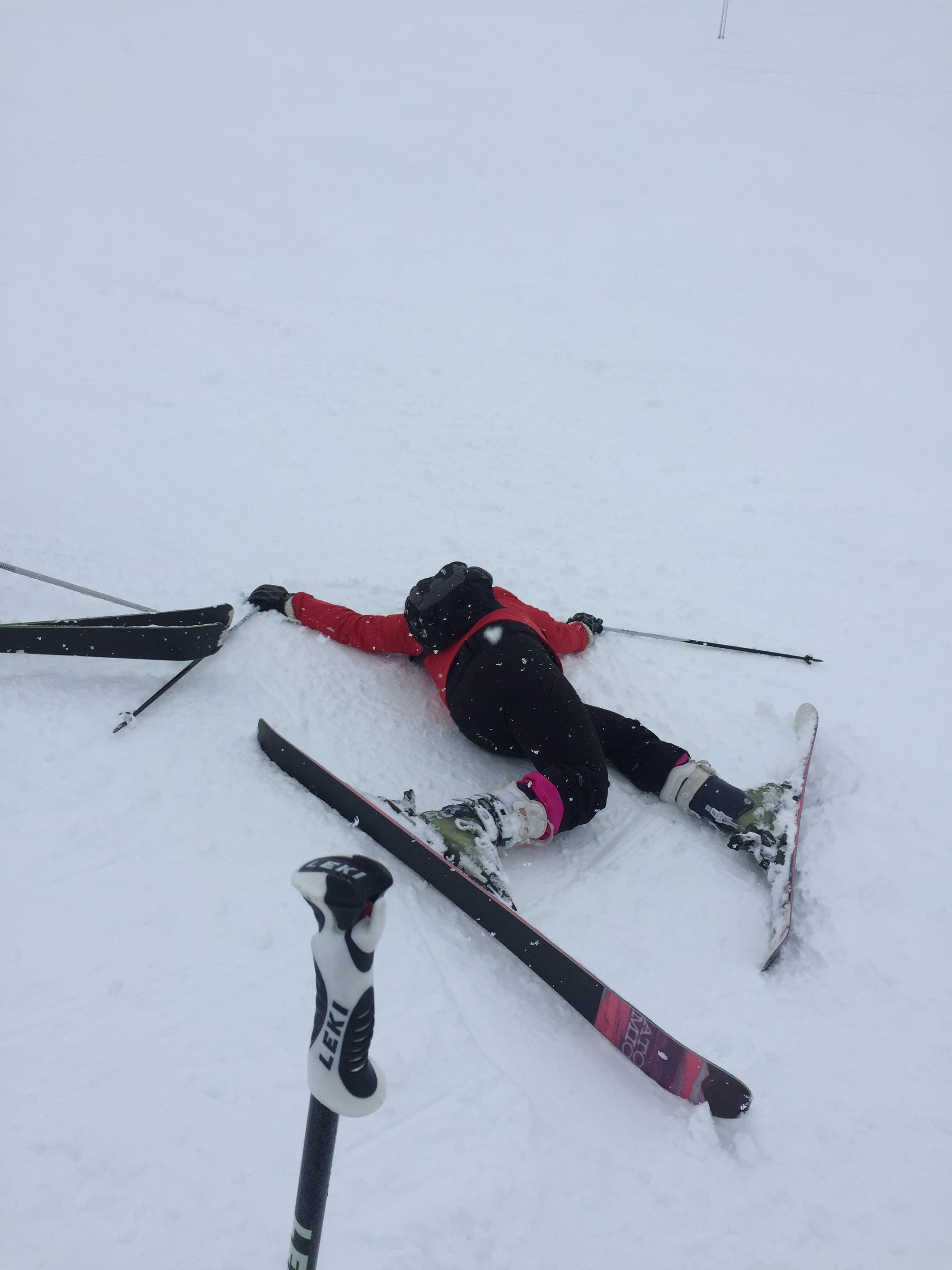
We’ve all been at the airport and seen people being wheeled through security or hobbling through the departure lounge on crutches…this doesn’t have to be you!! I’m not saying that you can 100% prevent an injury whilst on a ski holiday because … you can’t. BUT you can at least reduce the risk by taking a few simple steps.

HELMET

Wear a helmet…you may be the best skier in the world and never fall over, but you can’t control the people around you. At least you stand a chance if you have a helmet on and you get wiped out.

BOOTS!

Make sure you get your boots fitted by someone who is suitably qualified and take your time in making sure they are definitely the right boots for you. PLEASE don’t buy them online!! If your boots are too big or not done up tight enough and you fall over your bindings might not release! This is when injuries (particularly knee injuries) occur.  

SKIS

-BINDINGS!
The whole point of ski bindings is that they release when you fall over. This is one of the reasons they ask your weight and ski ability when fitting you with skis. Be honest…If you are a beginner…tell them you are a beginner. The tighter the binding the more force it will take for the ski’s to come off. If you fall over, you want your ski to come off straight away…you don’t’ want it falling off after you’ve fallen 100 metres down the slope and ruptured both ACL’s!!

-EDGES

Getting your edges sharpened can make a huge difference! Especially in Icy conditions. If you’re edges aren’t in good condition, you can’t dig them into the ice…you’re then much more likely to slide over and … Hello Broken wrist!!

SKI TO YOUR ABILITY

Ski the slopes that suit your ability…if you’ve only ever skied once in your life, its probably not advisable to head straight to the steepest black mogul run in resort on the 1st day! (Especially after an afternoon spent drinking and dancing on the tables at the Folie Douce!!!!)

CONDITIONS

Be wary of conditions! 1 slope can be completely different in the morning to the afternoon and you need to be able to adjust to this.

Icy? Dig your edges in and don’t try to stop on an icy patch!!

Slushy? Tighten up your boots – if you catch an edge you want your bindings to come off!

Poor visibility? Stick to tree runs – visibility will be better and generally speaking…If you can see where you’re going you’re less likely to crash and injure yourself.

TIREDNESS      

Majority of accidents happen towards the 2nd half of the week and in the afternoon. People are getting tired; they’re getting up early skiing all day and staying up late drinking/socialising. Take a rest day if you’re feeling tired or achy.

ALCOHOL

Drinking seems to be a big part of the ski culture in the Alps! Even the most experienced of skiers are much more at risk of injury after they’ve had a few drinks! Save your après until your safely off the mountain and you don’t have to ski back…OR just get the lift down!! Also…watch out for other drunk skiers!!! Worth bearing in mind your insurance will be void if you’ve got alcohol in your system as well! 

OTHER PEOPLE

Unfortunately most injuries are as a result of colliding with another skier! Generally speaking the rule of thumb is ‘Give way to the downhill skier’…however my advice would be; Be aware of everyone around you, don’t take it for granted that the person behind you is keeping an eye on where you are going.

  • Try to keep your turns predictable – don’t suddenly change direction without checking there’s no one behind you
  • Try not to stop suddenly in the middle of the slope

WHERE TO STOP?

Never stop below the brow of a hill or on a corner – people won’t be able to see you and won’t have time to stop once they have seen you!  

Never stop on a narrow bit of piste – its not only dangerous … its annoying!! Wait until you get to a nice wide bit of piste where you can stop at the side of the run out of the way!

Never stop in the middle of the slope – again its annoying and you are very likely to get hit!

Most importantly, have an amazing (injury free) holiday!!

What Do Osteopaths Treat?

There is a common misconception that osteopaths just treat backs! This is not the case at all! Yes, we do treat backs and it is probably one of our most common presentations. But we also treat a wide variety of other injuries and symptoms. 

Sports Injuries!

Tendonitis 

Tennis Elbow / Golfers Elbow

Plantarfasciitis

Sports Injury

Shin Splints

Muscles strains

Ankle and wrist sprains

Shoulder impingements

Rotator cuff injuries

Knee pain

Hip impingements

Post operative rehab e.g. ligament repairs

Pregnancy Related issues

Pubis symphysis pain

Sacroiliac joint dysfunction

Low back pain

Postural Related Issues

Neck pain

Headaches

Low back pain

Shoulder pain

Age Related Issues

Osteoarthritis

‘Wear and tear’

Spondylosis

Disc degeneration

Post operative rehab (e.g. joint replacements)

Back Related Issues

Low back pain

Nerve impingement

Neck pain

Rib pain

Sacroiliac joint dysfunction

Whiplash

Our osteopaths will perform an in-depth examination, work out exactly what it is that’s causing the symptoms and then develop a specific treatment plan. They will advise you on any rehabilitation exercises that may be of use and answer any questions you may have!